Showcase — Futuristic Conceptual Motorbike
This project explores the creation of a futuristic motorbike from a 3D model to a finished cinematic video. I modelled the motorbike in Cinema 4D, created animation studies without textures in Unreal Engine 5, used those movement videos as references in Seedance 2.0 and assembled the final video in CapCut.
The objective was to combine the precision of 3D modelling with the atmosphere and visual freedom of AI video generation, while keeping the motorbike consistent from the first frame to the last.
Starting with the Motorbike in Cinema 4D
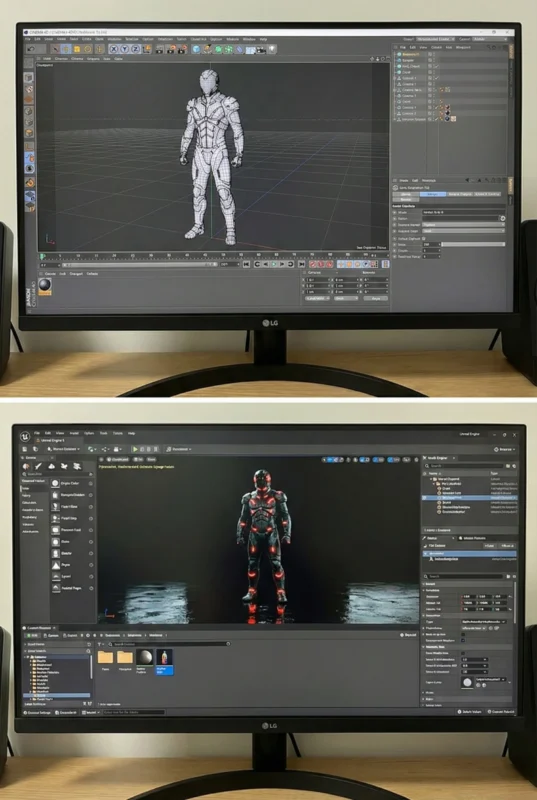
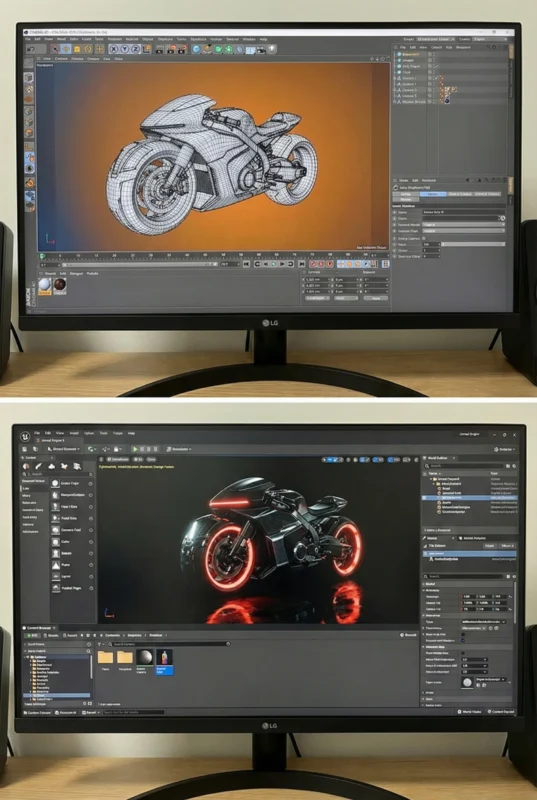
The first stage was the modelling of the futuristic motorbike in Cinema 4D. I focused on the main silhouette, the proportions of the chassis, the relationship between the wheels and the body, and the details that would make the vehicle recognisable in motion.
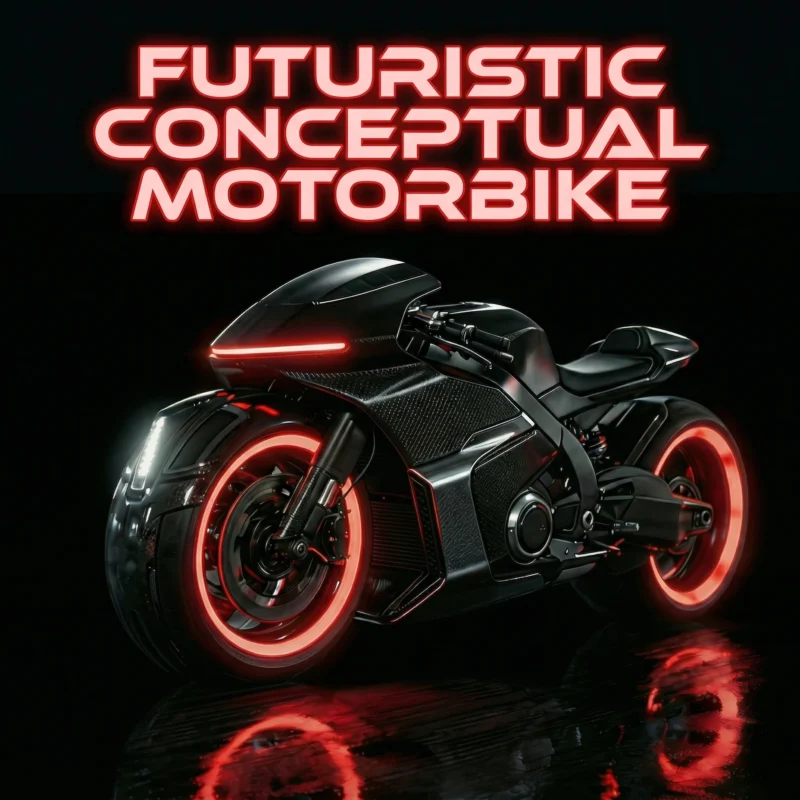
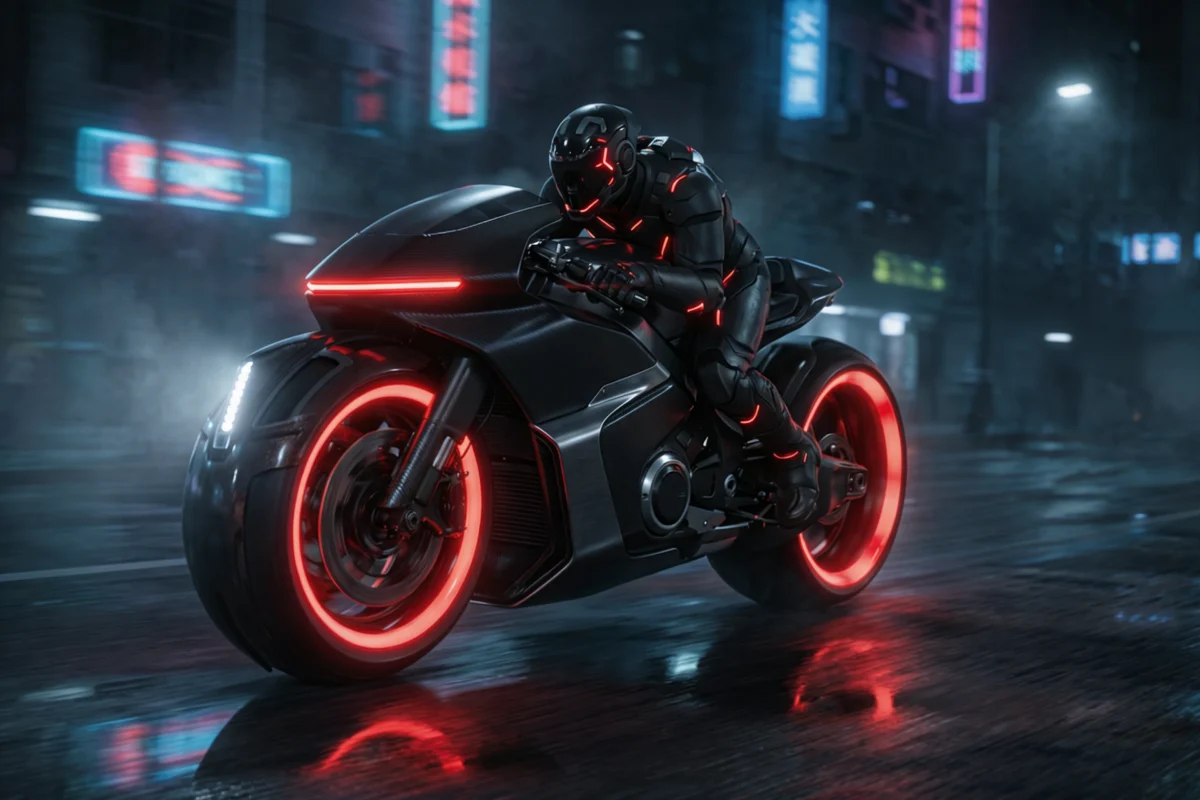
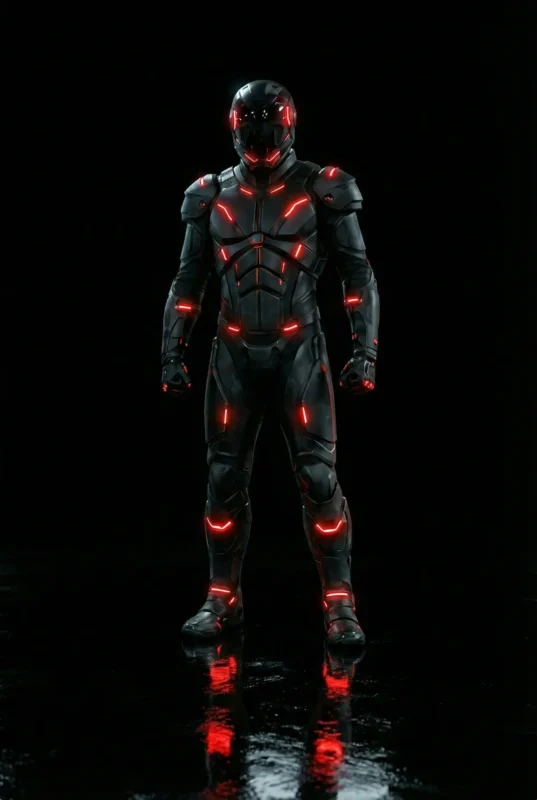
A conceptual vehicle needs a strong shape before any lighting or effects are added. I worked on the balance between a believable mechanical structure and a more speculative, sci-fi design language. The glow-rimmed tires and integrated rider character were treated as important parts of the visual identity rather than as decorative additions.
The Cinema 4D model became the foundation for every later stage. It defined the object that the camera would follow and gave the animation process a consistent subject.
Designing the Visual Identity
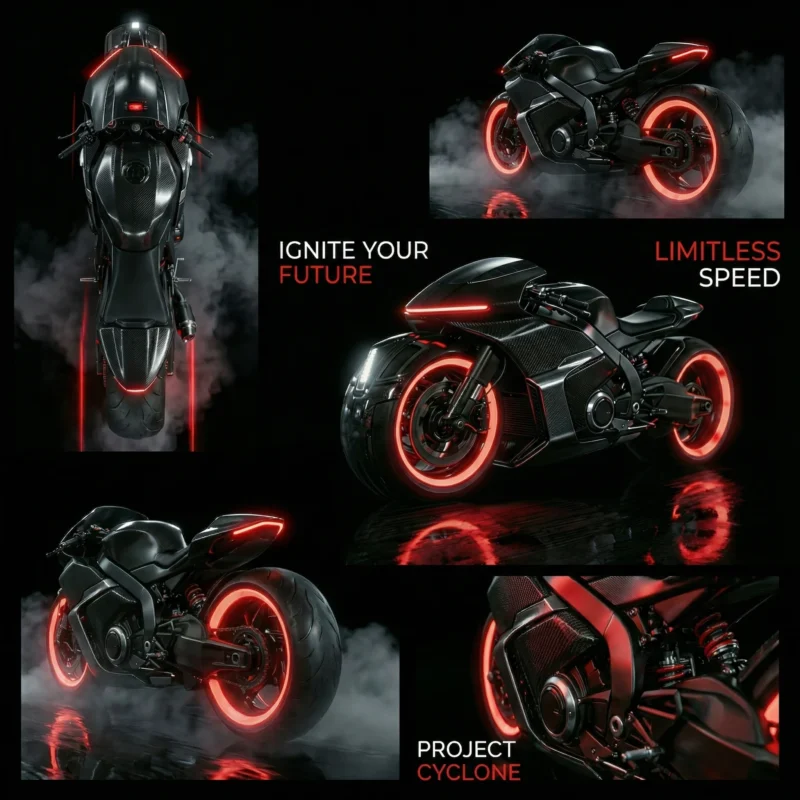
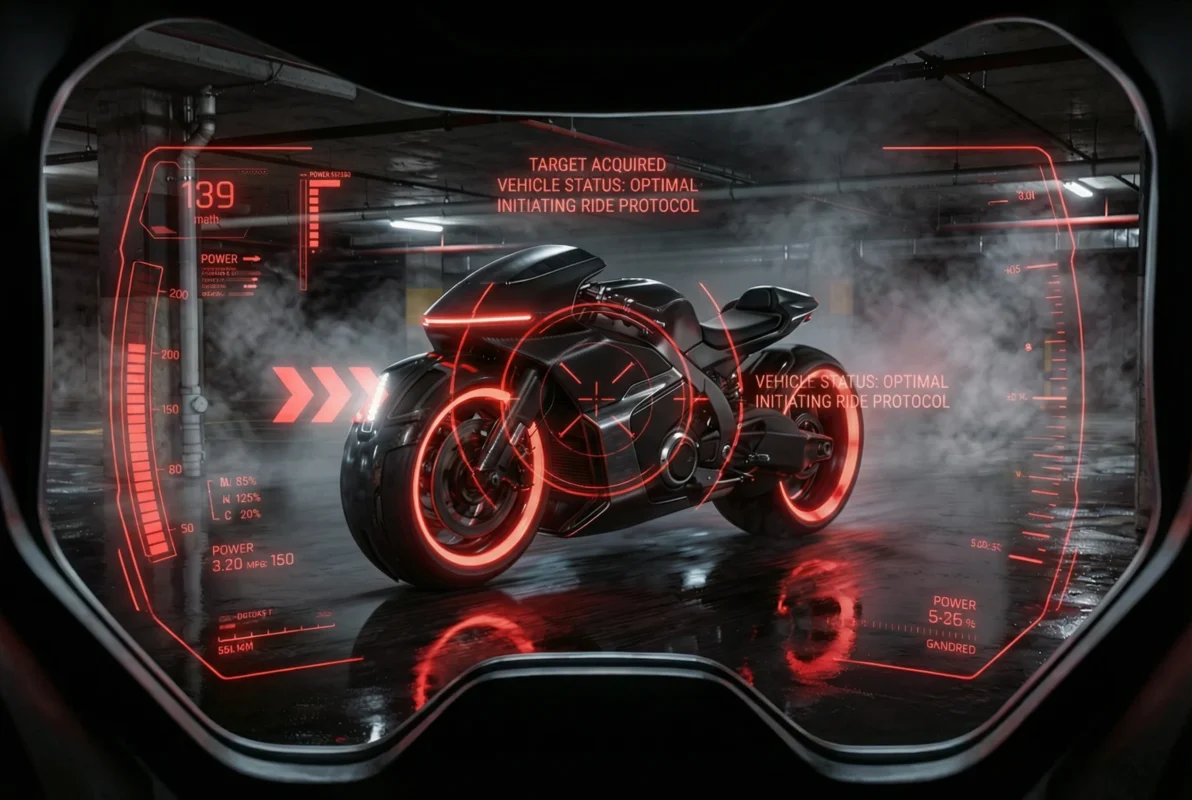
The motorbike was designed to feel fast, technical and cinematic. Its surfaces, wheel lighting and rider integration were developed to create a clear focal point in every composition.
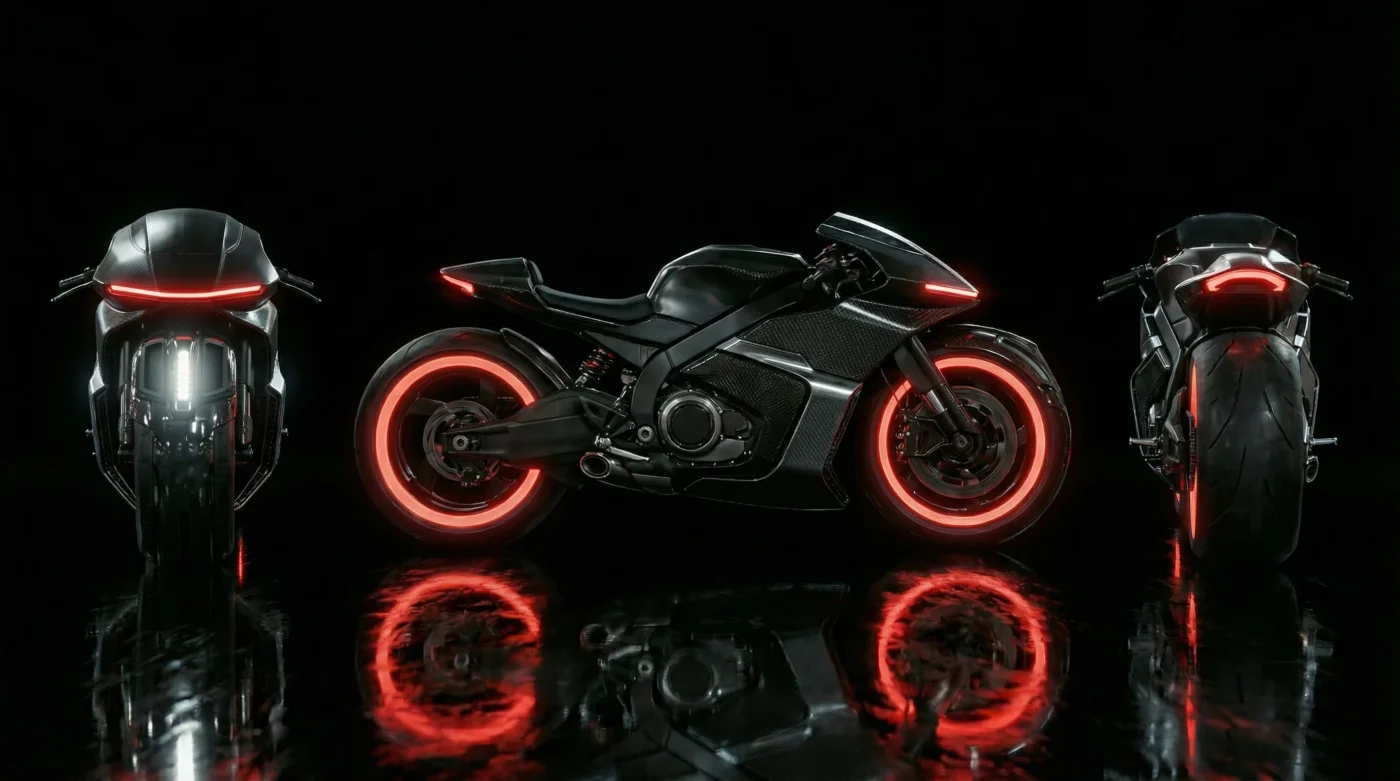
I evaluated the model from different perspectives to understand how the silhouette changed with the camera. A front view communicates attitude, a side view explains the proportions, and a three-quarter view combines the design details with a stronger sense of depth.
This exploration also helped define the visual language for the final video: dark environments, controlled highlights and a futuristic vehicle that remains readable even when the camera is moving quickly.
Testing Movement in Unreal Engine 5
After modelling the motorbike, I brought it into Unreal Engine 5 to create animation studies. I deliberately worked without textures at this stage. The purpose was to solve the movement first: camera paths, timing, framing and the relationship between the rider, vehicle and environment.
Without textures, I could focus on the structure of each shot and ask practical questions:
- Does the camera reveal the motorbike clearly?
- Does the movement feel controlled and cinematic?
- Are the wheels and rider integrated convincingly in the frame?
- Does each shot provide a useful transition to the next?
- Does the vehicle remain the clear visual subject?
This stage functioned as a motion blueprint. By testing animation before adding visual complexity, I could refine the sequence without being distracted by materials, lighting or effects.
Video Promo — Motorbike 2026
Using Unreal Movement as Seedance 2.0 Reference
The Unreal Engine animations were then used as references in Seedance 2.0. This was a key part of the workflow because the final AI videos were guided by movement that had already been planned in a controlled 3D environment.
Instead of asking Seedance to invent the complete camera movement from a still image, I provided videos that demonstrated how the camera should travel and how the motorbike should appear in the scene. This helped connect the final cinematic treatment to the original 3D design.
The reference videos provided direction for speed, angle and progression. Seedance 2.0 could then interpret those movements with a more atmospheric and cinematic visual treatment while preserving the core idea of the motorbike sequence.
Creating the Final Cinematic Videos
The Seedance stage was about finding the right balance between invention and control. I reviewed the generated clips for visual continuity, the readability of the motorbike and the quality of the movement.
The strongest results were the clips that maintained the intended camera logic while adding energy, depth and atmosphere. The vehicle needed to remain recognisable; visual effects were useful only when they supported the design and did not hide it.
This selection process was essential. AI video generation can produce many variations, but a finished campaign needs a coherent visual identity. I kept the clips that belonged to the same world and removed the ones that broke the relationship between the motorbike, rider and camera.
Editing the Final Video in CapCut
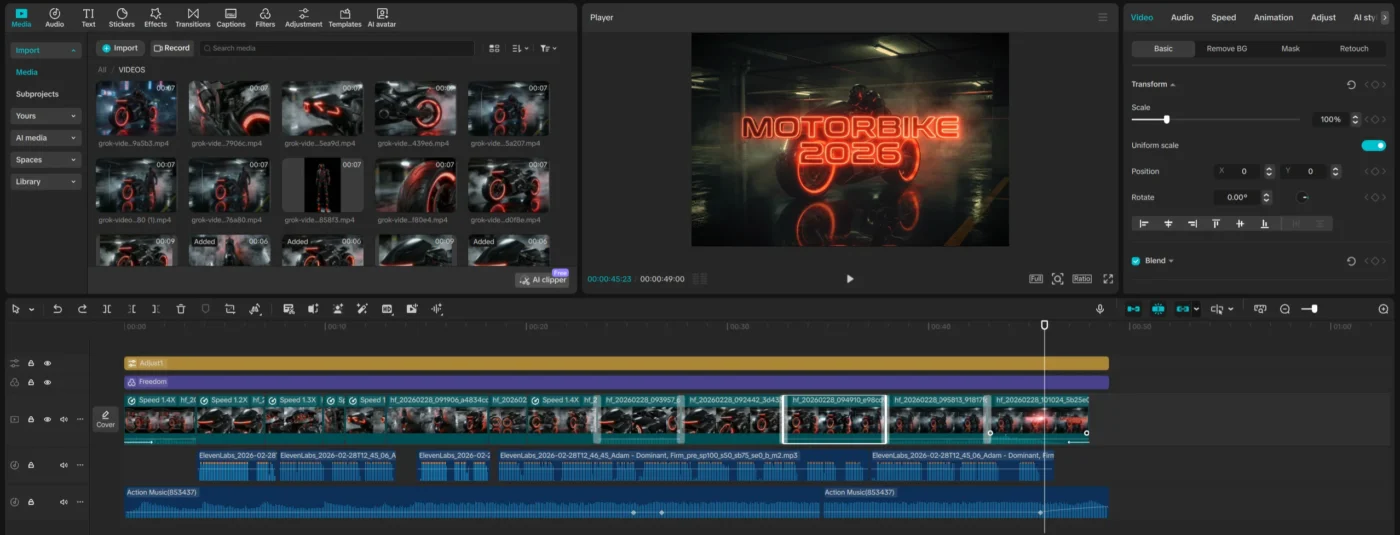
After selecting the final Seedance 2.0 clips, I assembled the finished video in CapCut. Editing gave the project its final structure and controlled the way the audience discovers the motorbike.
I organised the sequence around visual progression: establish the vehicle, reveal its details, increase the sense of movement and finish with a strong overall impression. The timing of each cut was adjusted so that the viewer had enough time to understand the form while still feeling the energy of a futuristic vehicle promo.
CapCut was also used to refine the continuity between shots. I selected the strongest transitions, balanced the pacing and removed clips that did not contribute to the final narrative. The result is not simply a collection of generated videos; it is an edited product film with a beginning, development and conclusion.
Screenshot — Video Promo
Documenting the 3D Production
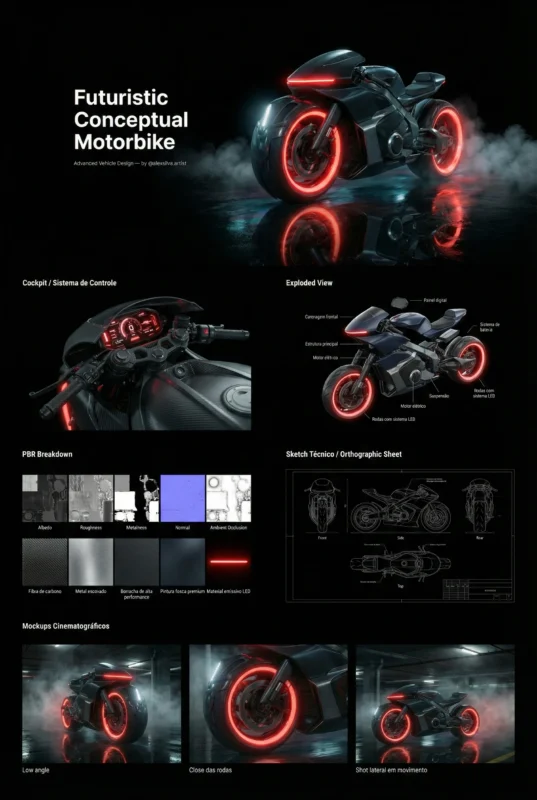
The screenshots from Cinema 4D and Unreal Engine show the connection between modelling and animation. Cinema 4D provided the motorbike and its design foundation, while Unreal Engine provided the environment for testing movement and creating the reference videos.
Cinema 4D and Unreal Engine 5


 English
  Portuguese