Showcase — Casa Horizonte
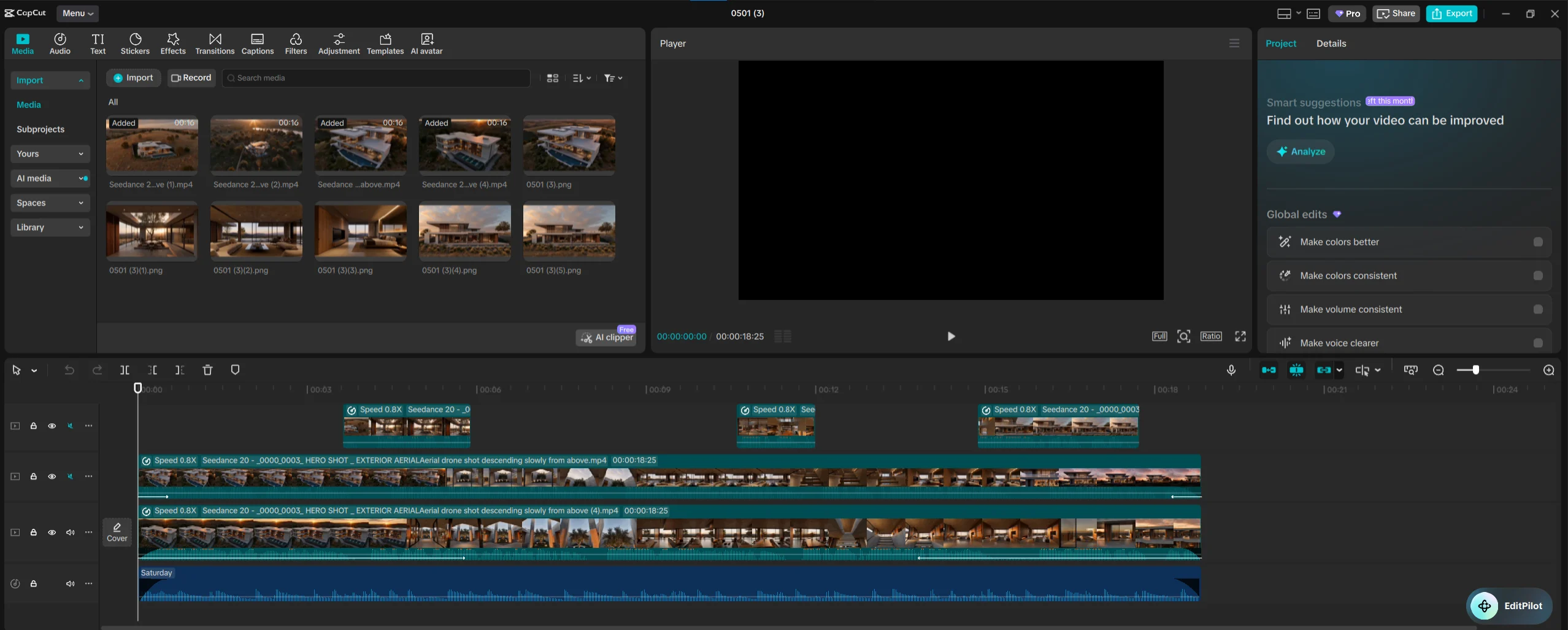
Casa Horizonte was developed as a complete architectural visualisation and cinematic video experiment. I modelled the house in Cinema 4D, created movement studies without textures in Unreal Engine 5, used those Unreal animations as references in Seedance 2.0, and edited the final video in CapCut.
The purpose of this workflow was to separate the project into clear creative stages: first establish the architecture, then define camera movement, then develop the cinematic visual treatment and finally control the rhythm of the finished film.
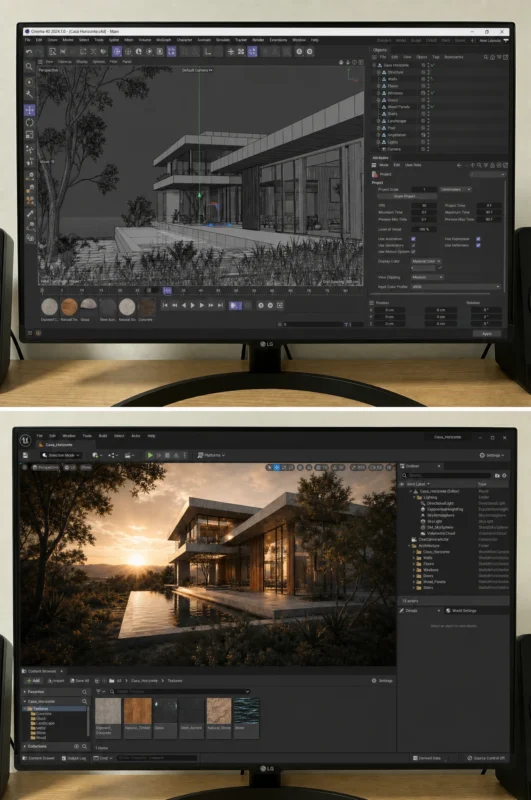
Starting with the House in Cinema 4D
The first stage was to build Casa Horizonte in Cinema 4D. At this point, the priority was the architecture itself: proportions, volumes, openings, roof lines and the relationship between the house and its surroundings.
Working on the structure before the final look allowed me to concentrate on the design of the building. I could study how the different planes connected, how the main forms read from a distance and which architectural details would become important once the camera started moving.
This stage created the foundation for every later image and video. A cinematic result depends on a reliable 3D base; if the proportions or camera angles are not convincing, lighting and post-production cannot fully solve the problem.
Preparing the Architectural Presentation
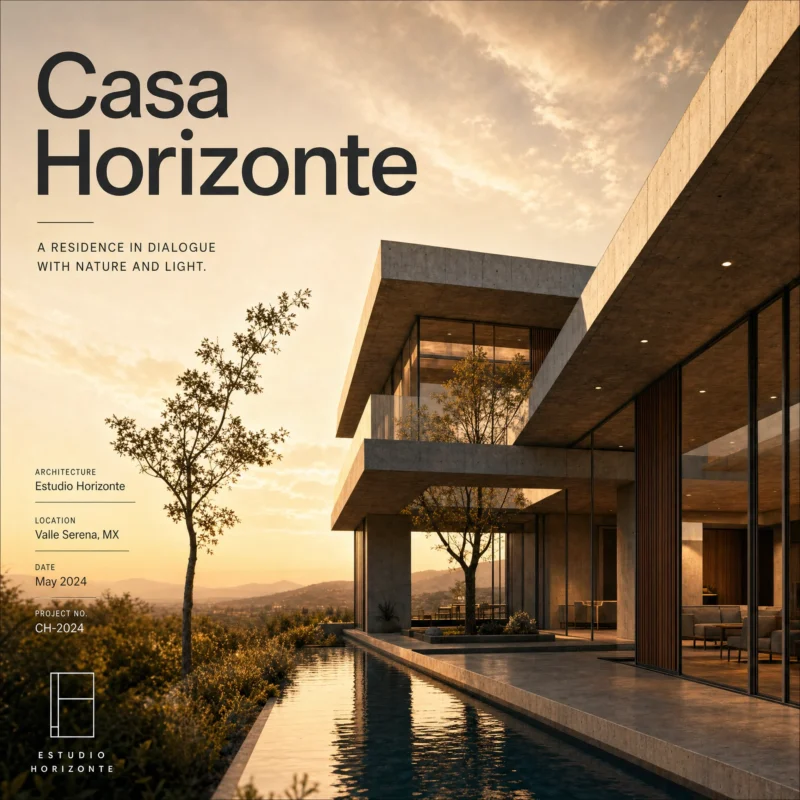
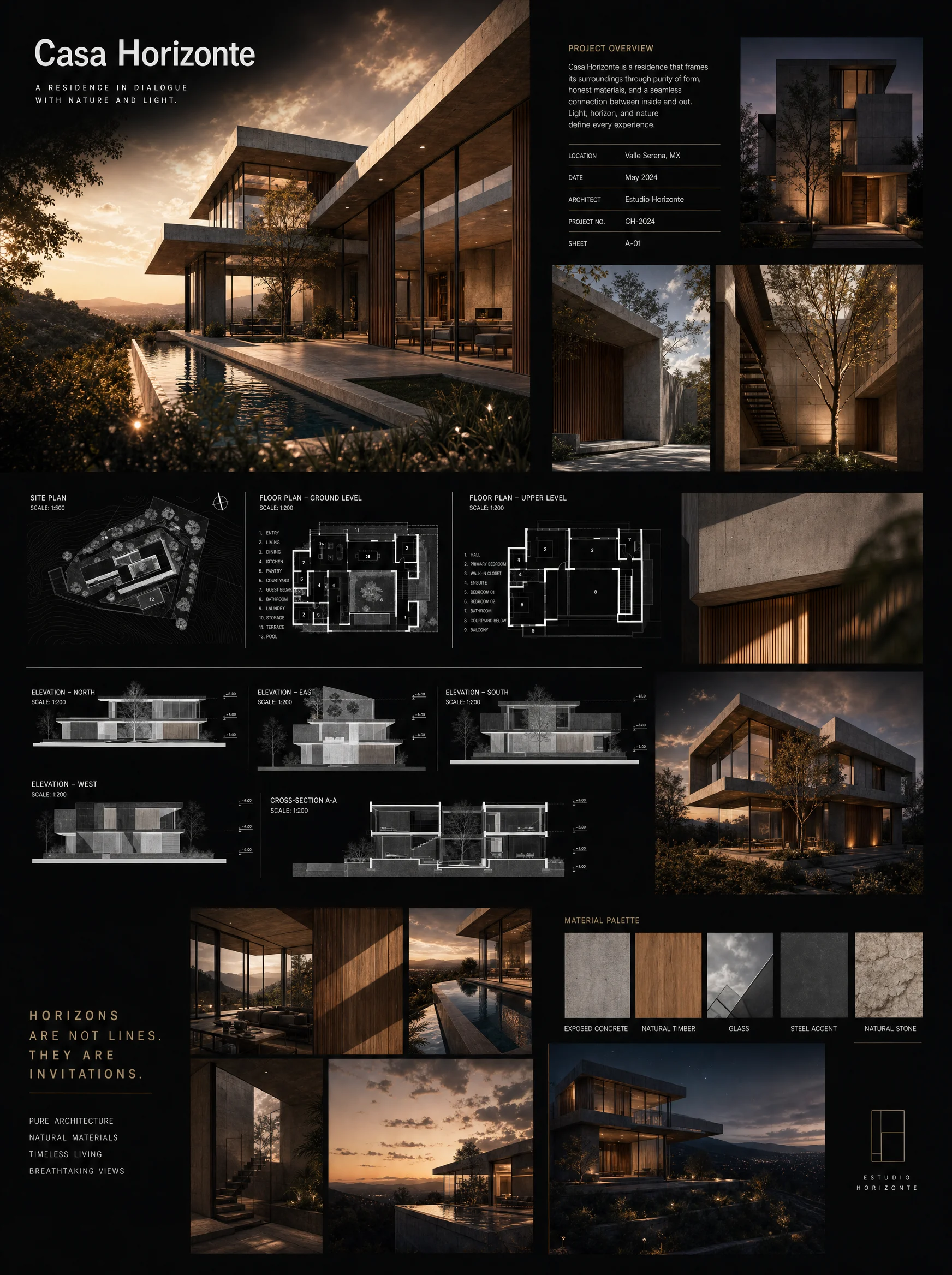
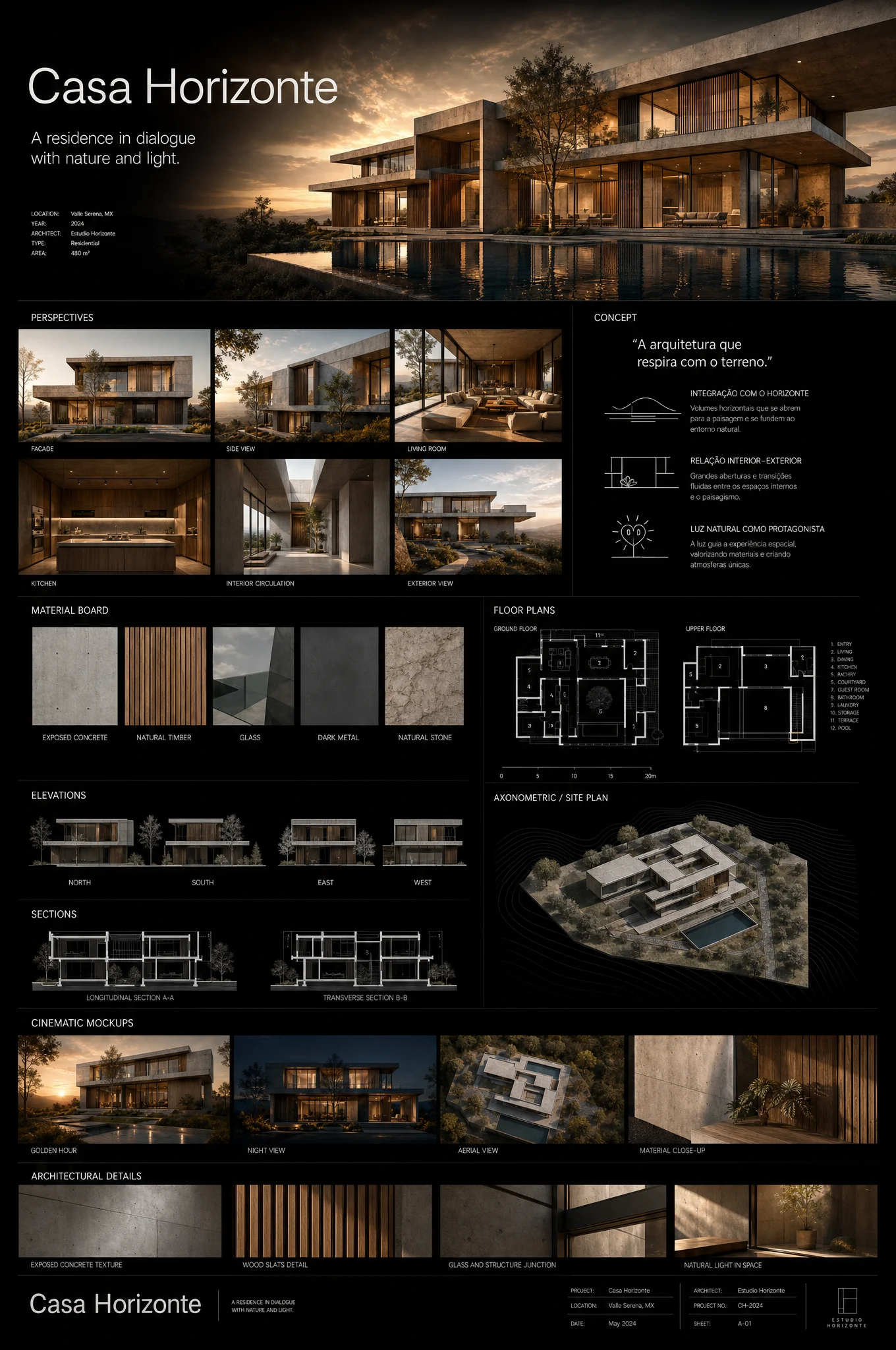
Once the house was established, I prepared still compositions that could present the project as a premium architectural visualisation. These images communicate the character of Casa Horizonte and create a reference for the later motion work.
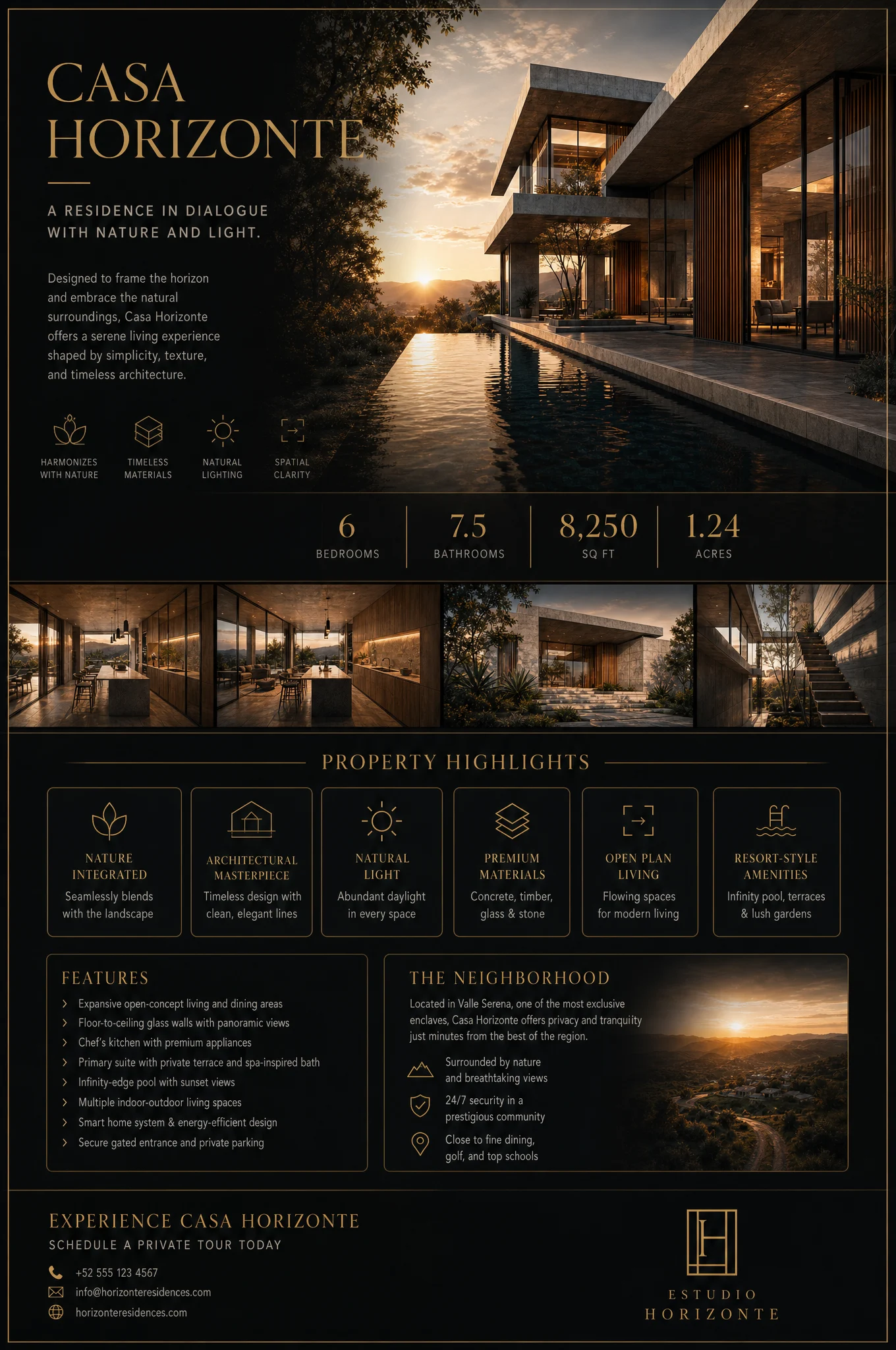
Showcase — Premium Listing Flyer
The listing flyer was designed as a clear, presentation-focused application. It needed to show the project with enough atmosphere to feel aspirational, while keeping the house as the main subject. The composition balances architectural information with the visual qualities expected in a luxury real-estate presentation.
Creating Movement in Unreal Engine 5
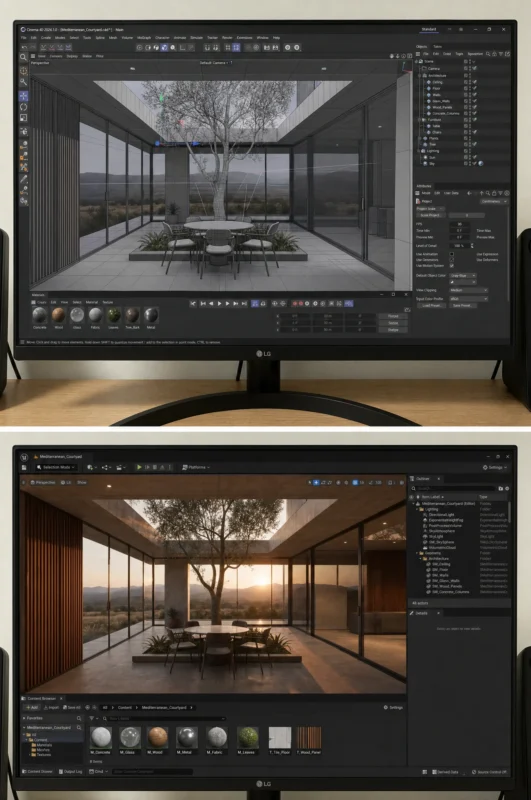
The next step was to bring the Casa Horizonte model into Unreal Engine 5 and develop the movement studies. I deliberately worked without textures during this stage. The goal was to focus on animation, camera paths, framing and the visual rhythm of the shots before introducing the final surface treatment.
Removing textures made it easier to evaluate the essentials:
- Camera direction: whether the movement revealed the architecture naturally.
- Speed and timing: whether each shot felt calm, premium and cinematic.
- Scale: whether the house remained the visual anchor throughout the sequence.
- Transitions: how one camera position could lead into the next.
- Composition: which parts of the building deserved emphasis in a vertical or horizontal frame.
This was an important decision in the workflow. By solving movement before textures, I could refine the cinematic structure without being distracted by material details. The Unreal scenes functioned as a visual blueprint for the final videos.
Video Promos — Casa Horizonte
Video Promo — Casa Horizonte
Using Unreal Animations as Seedance 2.0 References
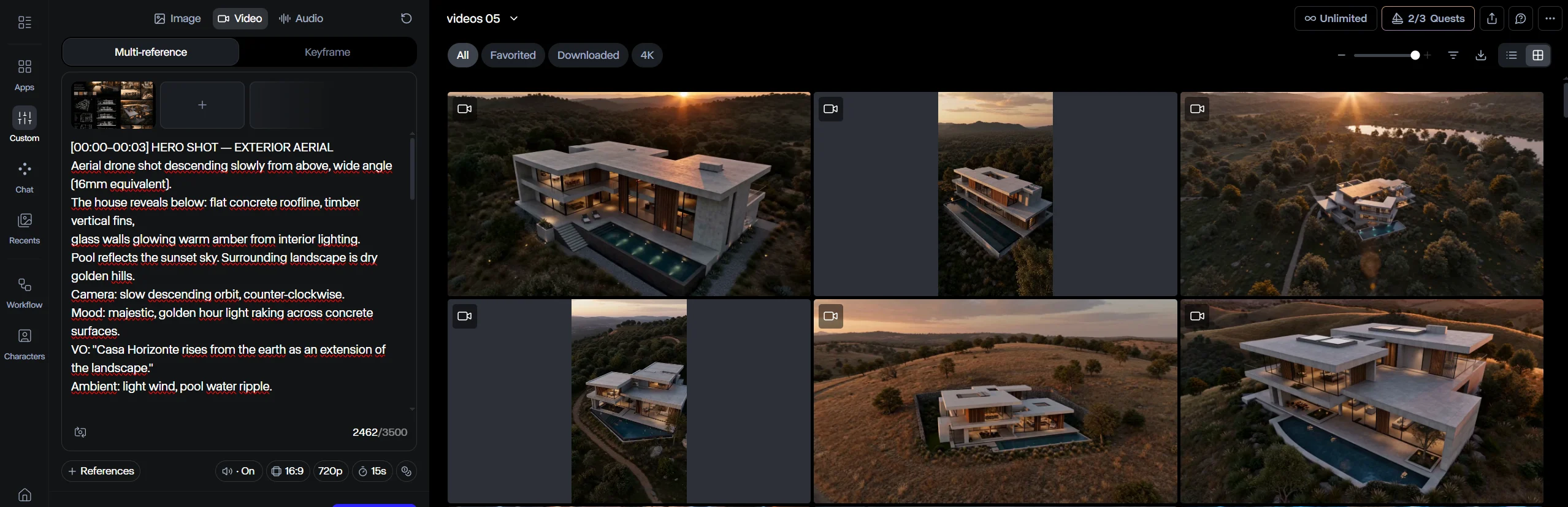
After developing the movement studies in Unreal Engine, I used those videos as references in Seedance 2.0. This allowed the final AI video generation to follow the camera logic and motion that had already been designed in the 3D environment.
The Unreal references gave Seedance a clear sense of direction. Instead of asking the model to invent the entire movement from a still image, I supplied a guide for the sequence: where the camera should travel, how the building should be revealed and how the shot should progress over time.
This reference-based approach connected the precision of a 3D workflow with the visual possibilities of AI video generation. The architecture and movement came from a controlled scene, while Seedance 2.0 was used to develop the final cinematic interpretation.
Casa Horizonte Construction Sequences
The construction-focused videos explore another side of the project. They present the house as something that can be understood through stages, layers and evolving views, rather than only as a finished architectural object.
Casa Horizonte Construction


 English
  Portuguese